Santiago de Compostela: guide to the end of the Camino Francés
Destination: Santiago de Compostela
Introduction
Reaching Santiago is more than arriving in a city: it is the end of days of walking and effort. This guide gathers what you usually need on arrival: where to collect the Compostela, what to see in the Cathedral, where to eat well and how to get around the city.
Stages
Santiago de Compostela
Total km
4,4 KM
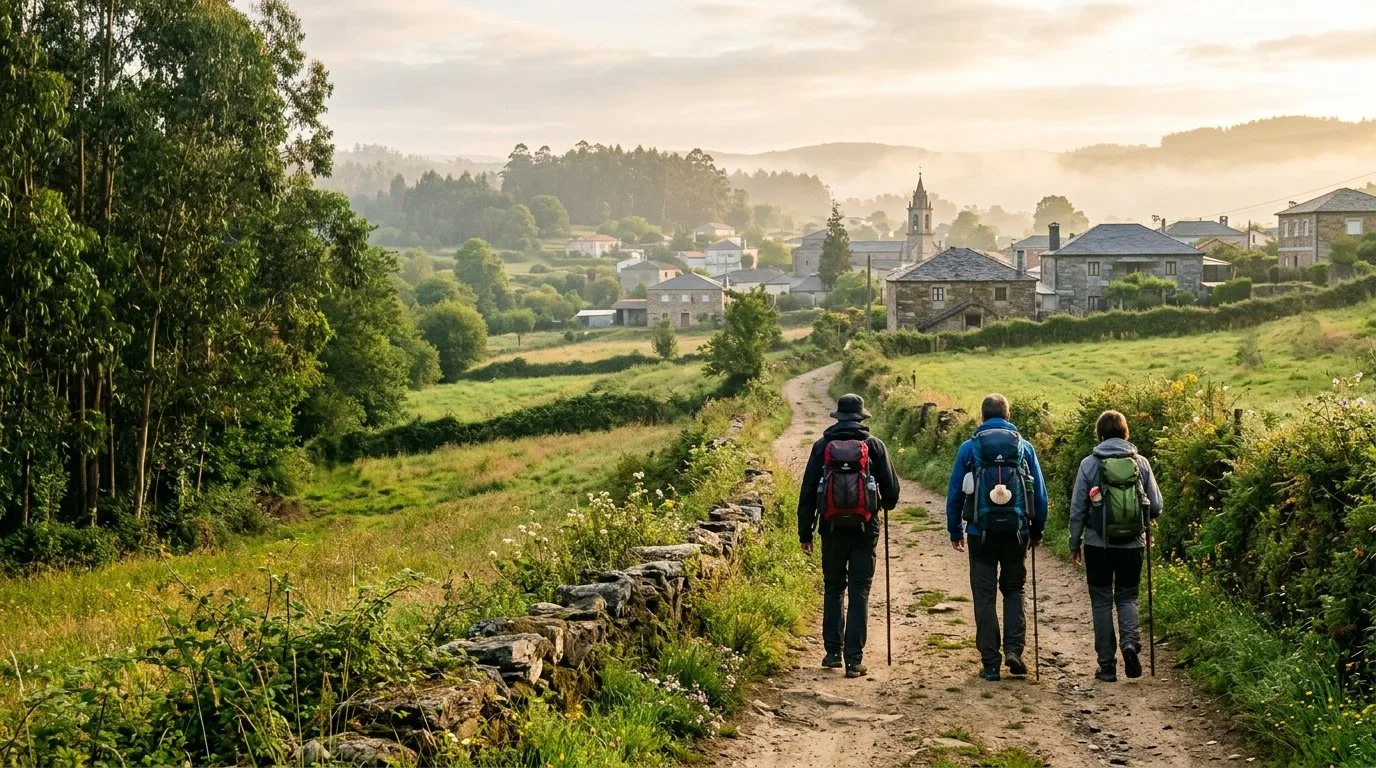
Sleep in Arzúa and arrive rested
Casa Buen Camino is in Arzúa, about 39 km from Santiago. It is a good place to rest before the last stages and reach the Obradoiro full of energy.
What you will find at the house:
- Location: 400 metres from the centre of Arzúa, with shops and restaurants nearby.
- A house just for you: we rent it whole, for up to 8 people.
- Personal attention: we look after you ourselves, by phone or WhatsApp.
- Place secured: book ahead and forget about looking for accommodation at the last minute.
Book at Casa Buen Camino
Monte do Gozo – Santiago: entry map
Monte do Gozo is the most moving place of the last stage: about 5 km from the finish, it is where the towers of the Cathedral first appear. Many pilgrims stop here for a good while.
Key tip: even if you feel like running to the Obradoiro, stop for a moment at the monument to the pilgrims and breathe. The last descent towards San Lázaro is better enjoyed slowly.
Then comes the entry into the historic centre through the Porta do Camiño. If you arrive rested, you will enjoy it far more.
From Arzúa to Santiago: your arrival in the city
So you don’t miss a single detail of the end of the Camino, we have added a map with the route of the Camino Francés into Santiago.
It runs from Monte do Gozo, where you see the towers of the Cathedral for the first time, to the historic centre and the Porta do Camiño. Follow the map to the Plaza del Obradoiro.
On arrival
- Plaza del Obradoiro: it is the heart of the city. Leave your backpack, sit on the ground and look at the façade of the Cathedral calmly.
- Credential and Compostela: go to the Pilgrim Reception Centre (Rúa de Carretas, 33).
Tip: you can book a slot online to avoid queues. You need your credential with the stamps, including the one from Arzúa.
The Cathedral
- Pilgrim’s Mass: held every day at 12:00 and 19:30.
- Botafumeiro: it doesn’t always swing. It is usually done on solemn feast days or if a group has requested it. You can check at the Cathedral office.
- Hug to the Apostle: you reach it from behind the high altar, following tradition.
- Portico of Glory: a Romanesque masterpiece. You need to book weeks in advance on its official website.
- The Cathedral roofs: if you fancy seeing Santiago from above, the visit to the granite roofs is worth it and gives a bird’s-eye view of the city.

Where to eat in Santiago
Santiago is a great place to eat. To avoid the tourist traps, look out for these places:
- Mercado de Abastos: the second most visited place in the city. It is worth strolling through its stone halls and trying fresh produce. In hall 5 they will cook what you buy at the stalls.
- Mercado da Galiciana: a food market with 8 kitchens, 3 drinks bars and delicatessen stalls, right in the centre.
- Rúa do Franco and Rúa da Raíña: the classic tapas streets. Look for the cup of ribeiro wine and pulpo á feira. Rúa do Franco is the most touristy, so choose carefully where you go in: if you see locals, it is a good sign.
- Typical sweet: don’t leave without the original Tarta de Santiago, the one with the Cross of Saint James in icing sugar. Here are some places we like, by type of cuisine:
Cafés & Brunch
Lusco&Fusco
Specialists in homemade American and Galician baking. Their cakes are worth it.
Clem Café
Specialty coffee and healthy dishes made with local produce.
Recommended restaurants
A Curtidoría
Famous for its rice dishes and high-quality Mediterranean cuisine right in the centre.
A Maceta
Fusion and tradition in a space with an inner garden. A classic of local gastronomy.
O Curro da Parra
Creative market cuisine with impeccable service. Good for a special dinner.
Burgers & Casual Food
La Burgueira
Gourmet burgers with surprising ingredients and homemade chips.
Goiko
For those looking for hearty burgers and its famous Kevin Bacon.
Sushi & Asian Food
Sibuya Urban Sushi
Innovative and original sushi in a modern, young setting.
Sushisom
All-you-can-eat à la carte buffet with a huge variety of pieces and hot dishes.
Corners for a relaxed stroll
If you liked the calm of Arzúa, in Santiago you will love these corners:
- Alameda Park: the best views of the Cathedral, from the Paseo de la Herradura. Take a photo with the statues of “Las Dos Marías”.
- Monastery of San Martín Pinario: right opposite the Cathedral, it is impressive in size and has a museum.
- Bonaval Park: a former cemetery turned into a park, with very pretty views at sunset.
Practical information
- Left luggage: if you want to stroll without weight, there are lockers at the Pilgrim’s Office and near Plaza de Galicia.
- Transport: the train station and the bus station are joined by a modern walkway. There are direct buses to the airport every 20-30 minutes from the centre.
- A souvenir: look for jet or silver crafts in the shops on the Plaza de Platerías.
Compostela and Certificate of Distance
- Compostela: awarded to those who walk or ride on horseback at least the last 100 km, or cycle 200 km, with a religious or spiritual motivation. If you start on foot outside Spain, you must cover at least 70 km in Spanish territory.
- Stamps: have your credential stamped and dated at the start and end of each stage.
- Certificate of Distance: any pilgrim can request it, even without meeting the Compostela requirements, and it certifies the route you have completed. More information at the Pilgrim’s Office.
Congratulations, pilgrim! You have reached Santiago. If you want to go over the last stretch again, go back to the O Pedrouzo – Santiago stage. Buen Camino!

Where to eat in Arzúa
Cheese and octopus. You can’t leave Arzúa without trying Arzúa-Ulloa cheese. Near the centre you will find pulperías (octopus restaurants) and traditional restaurants where the food is very good.
A tip: try the cheese with quince paste for dessert, it’s the classic way.

Culture and traditions
The town and the Camino. Arzúa grew up alongside the Jacobean route. It is a pleasure to stroll through the old town and look into the Magdalena chapel.

Leisure in Arzúa
Nature close by. If you have energy left, head to the Fervenza das Hortas or the Ribadiso recreation area, a lovely spot to rest your feet before the last stage.

What to do in Arzúa
Beyond walking. There are short hiking routes and centres where they show you how cheese and honey are made. A good plan if you take a rest day before reaching Santiago.
Santiago, unhurried
Once you have your Compostela, the city offers far more than the Cathedral. Here are ideas for the days you stay, with no rush, and almost all of them free.
Corners with history
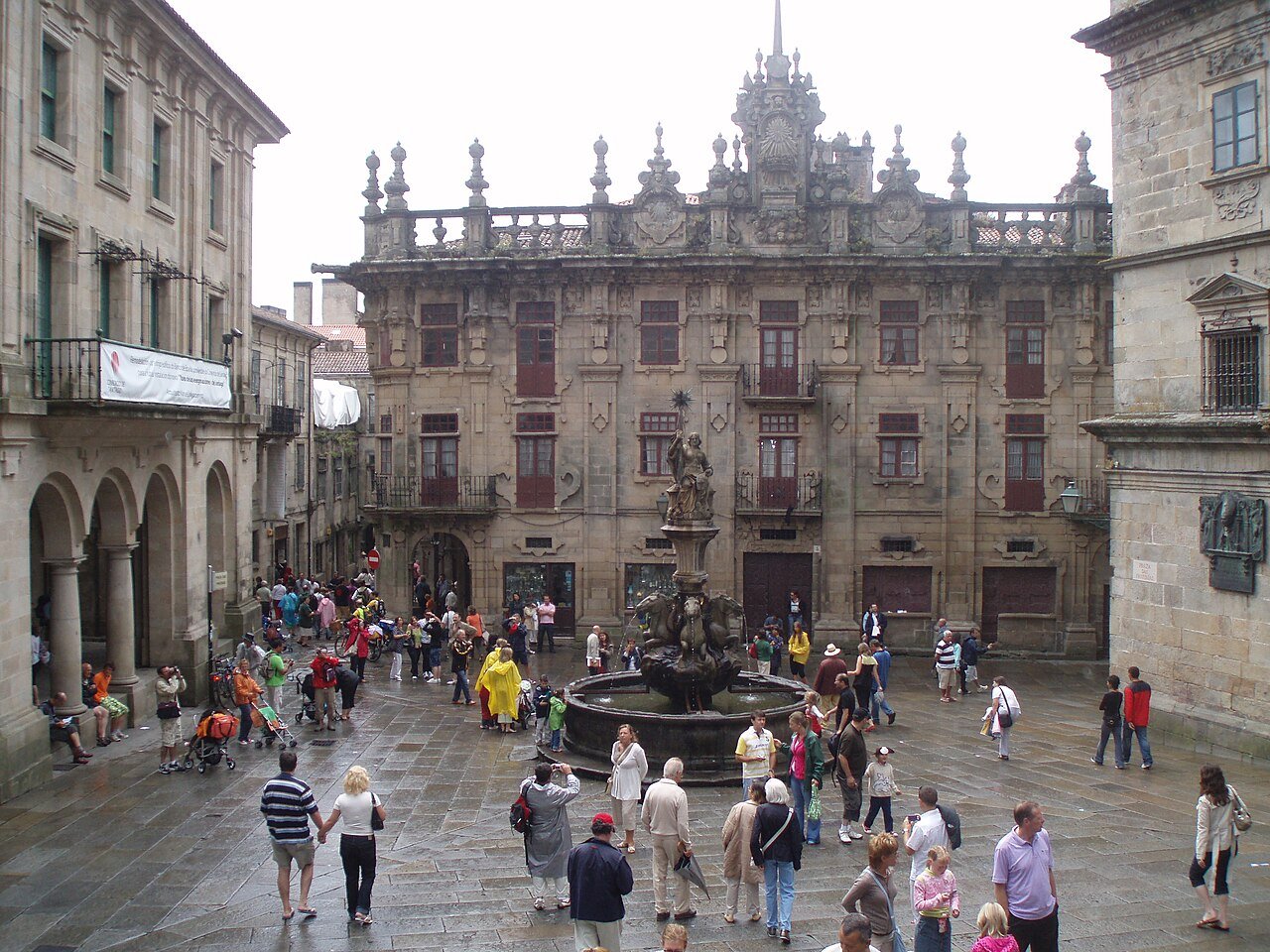
Platerías Square
Silversmiths once sold their wares to pilgrims here. Look for the Fountain of the Horses in the middle, and for the side of the Cathedral that overlooks it.
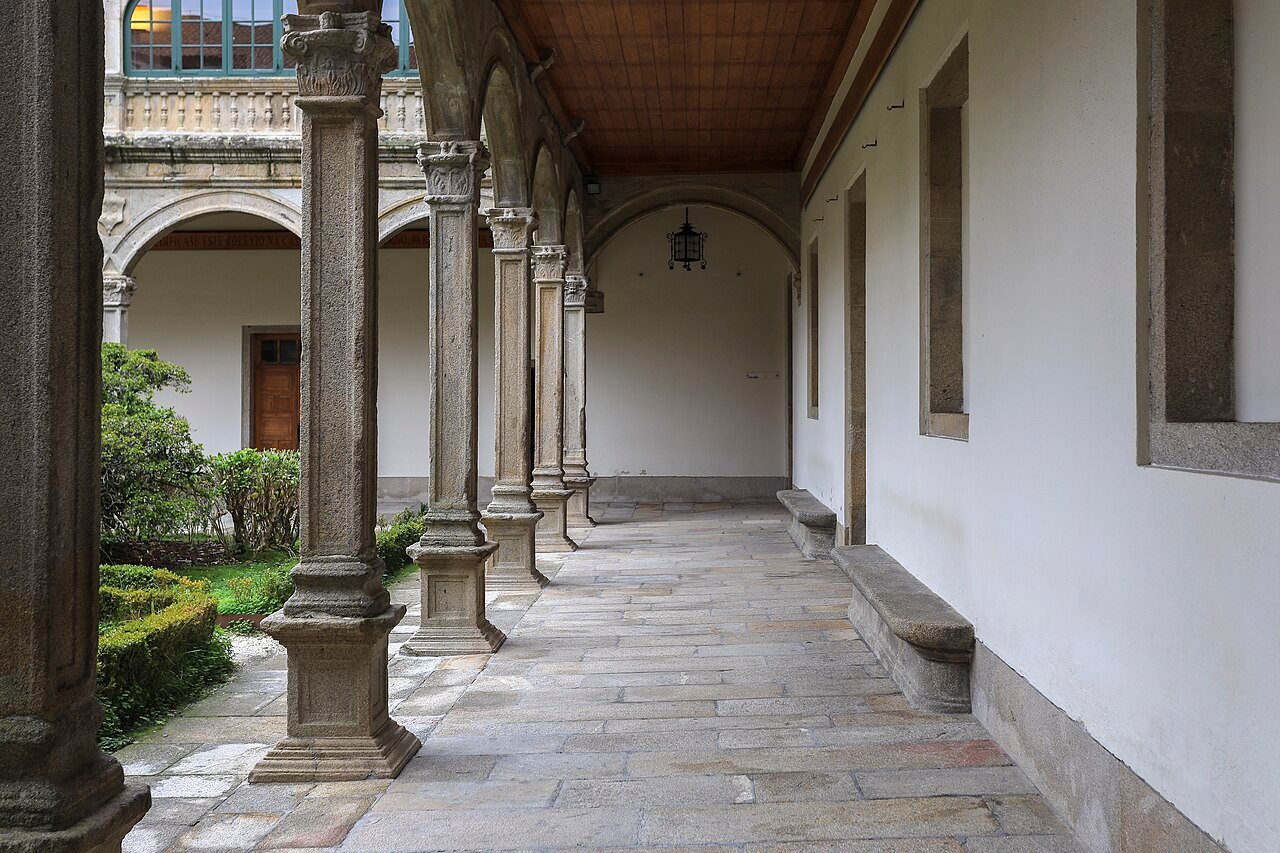
Pazo de Fonseca
The cradle of the university, with a calm cloister and a Gothic chapel. Entry is free but it does not open every day, so check before you go.
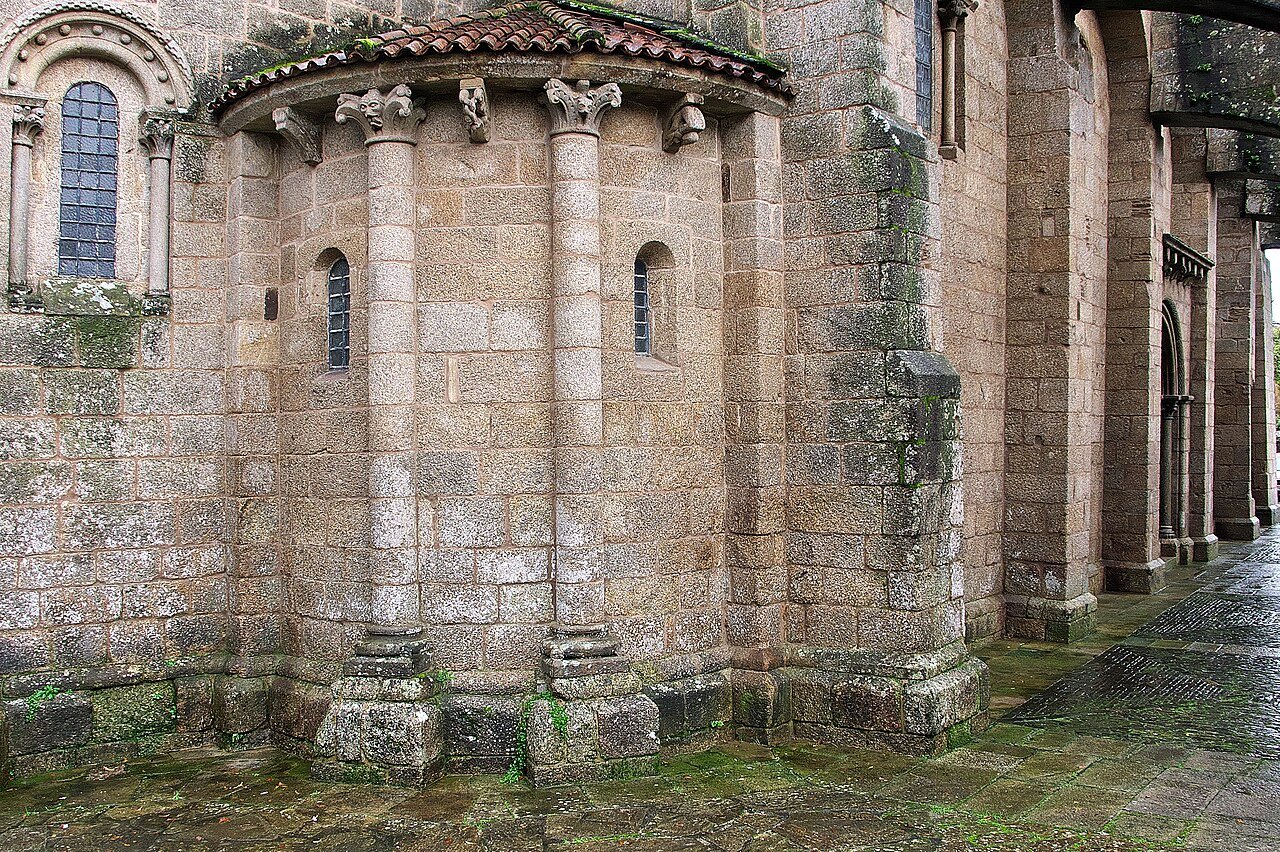
Collegiate Church of Santa María do Sar
A Romanesque church about 4 km away, with columns that lean in a startling way. You reach it along a path beside the Sar river.
When the afternoon fades
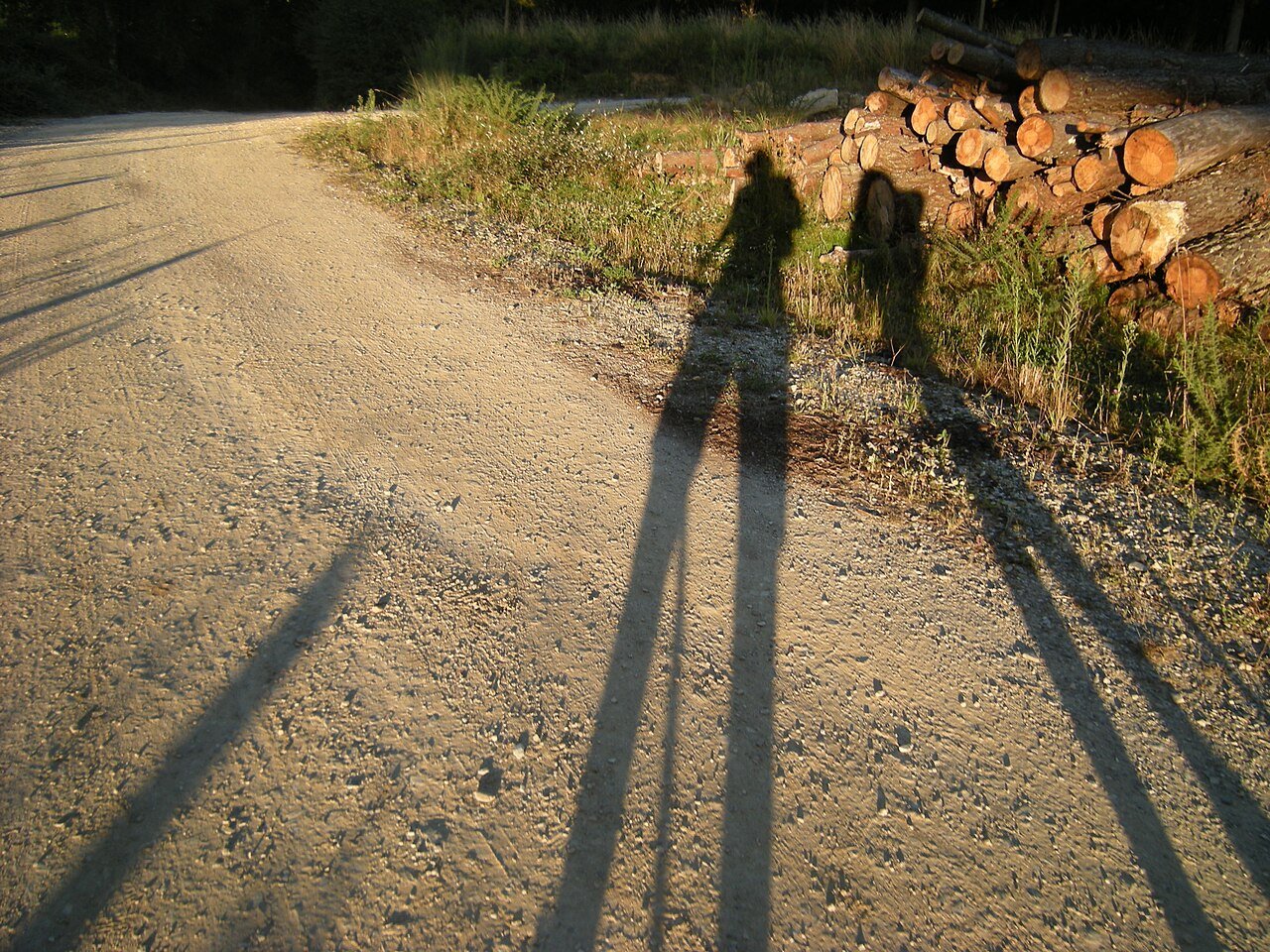
- Monte Pedroso The widest view of the city. It takes under an hour on foot from Rúa Ponte da Asén; go with plenty of daylight to get back.
- Quintana Square They say that when the sun is low, a pilgrim’s silhouette appears on a stone near the Cathedral. Keep your eyes open: it is brief, and lovely.
- The old town at night When the crowds leave, the granite streets empty and shine in the lamplight. Wander with no destination.
- Queimada A Galician drink of aguardiente, sugar and lemon, set alight in a clay bowl. Some bars and workshops prepare it in front of you; share it with good company.
Museums that make sense of the walk
- Pilgrimage Museum On Platerías Square, it tells how the pilgrimage gave birth to the city. Useful right after you arrive.
- Museo do Pobo Galego Traditional Galician life inside a former convent. Its triple spiral staircase is worth a visit on its own.
- CGAC Contemporary art in a building by Álvaro Siza, right beside the Porta do Camiño and Bonaval.
Opening hours and prices change, so check the official websites or the Tourist Office.
Beyond Santiago
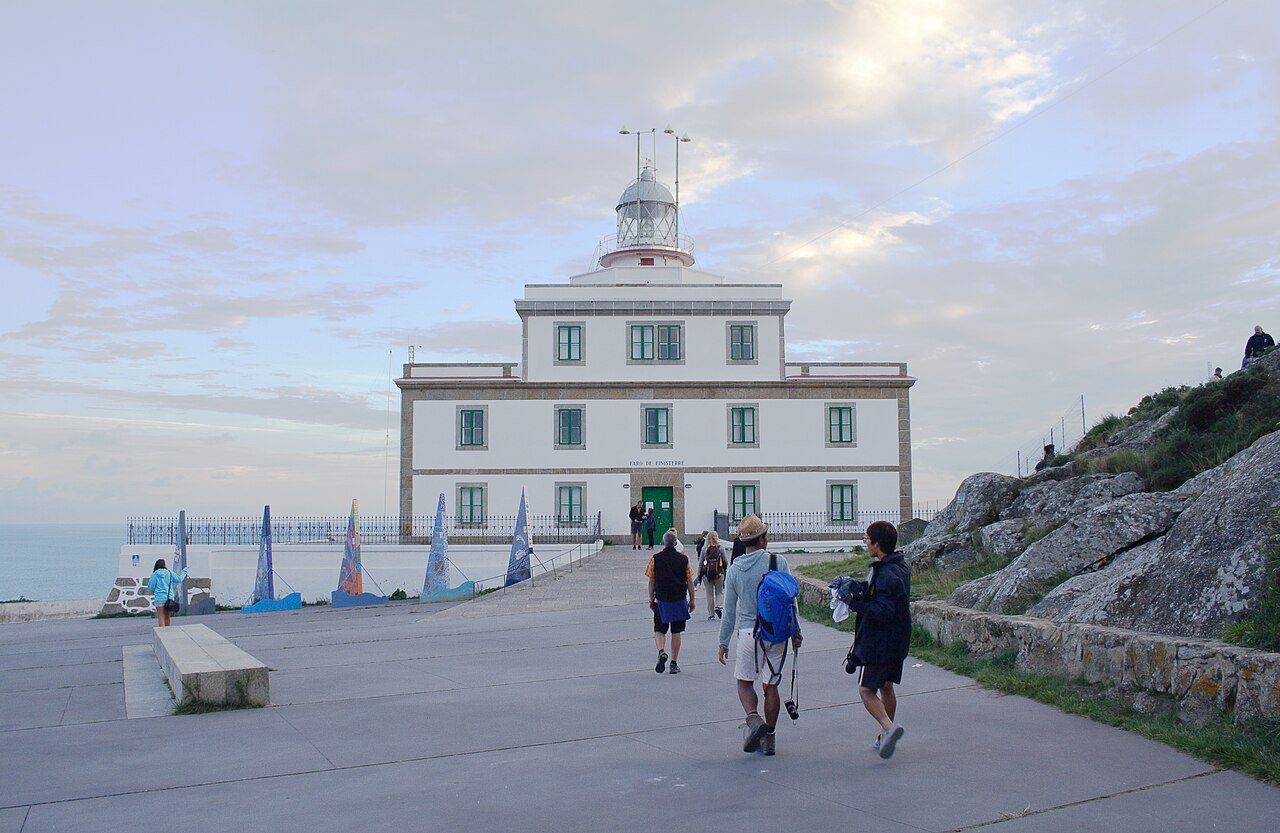
- Fisterra To the Romans, the end of the known world, and for many the natural close to the journey. Reachable on foot or by bus.
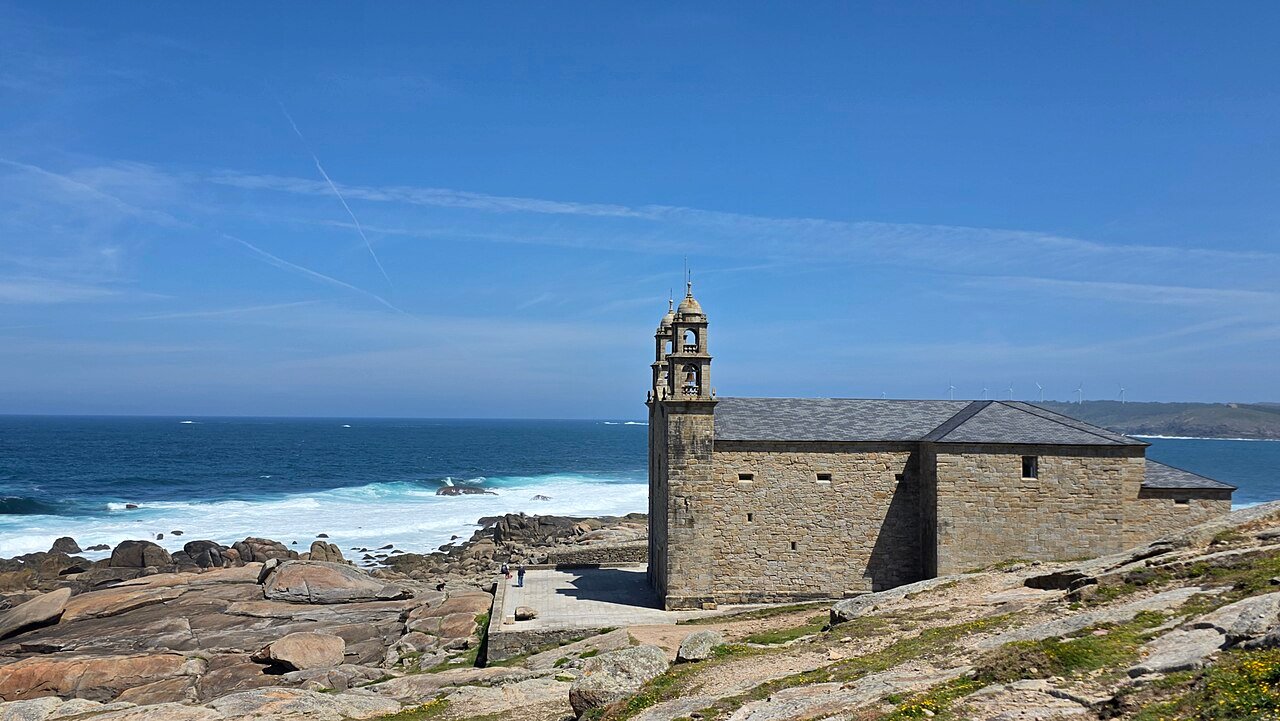
- Muxía The sanctuary of the Virxe da Barca, facing the open sea.
- Ribeira Sacra and the Rías Baixas Terraced vineyards above the Miño and Sil rivers; fishing villages, lighthouses and beaches on the coast.
Three easy plans
- Your first afternoon: Platerías Square, a stroll to the Alameda and unhurried tapas.
- A rest day: the Pilgrimage Museum in the morning, Bonaval after lunch and Monte Pedroso as the day fades.
- If it rains: Pazo de Fonseca, San Martiño Pinario and a good table.
Photos from Wikimedia Commons: author and licence under each image.
📸 The Camino in pictures
A glimpse of what awaits you on the trail.
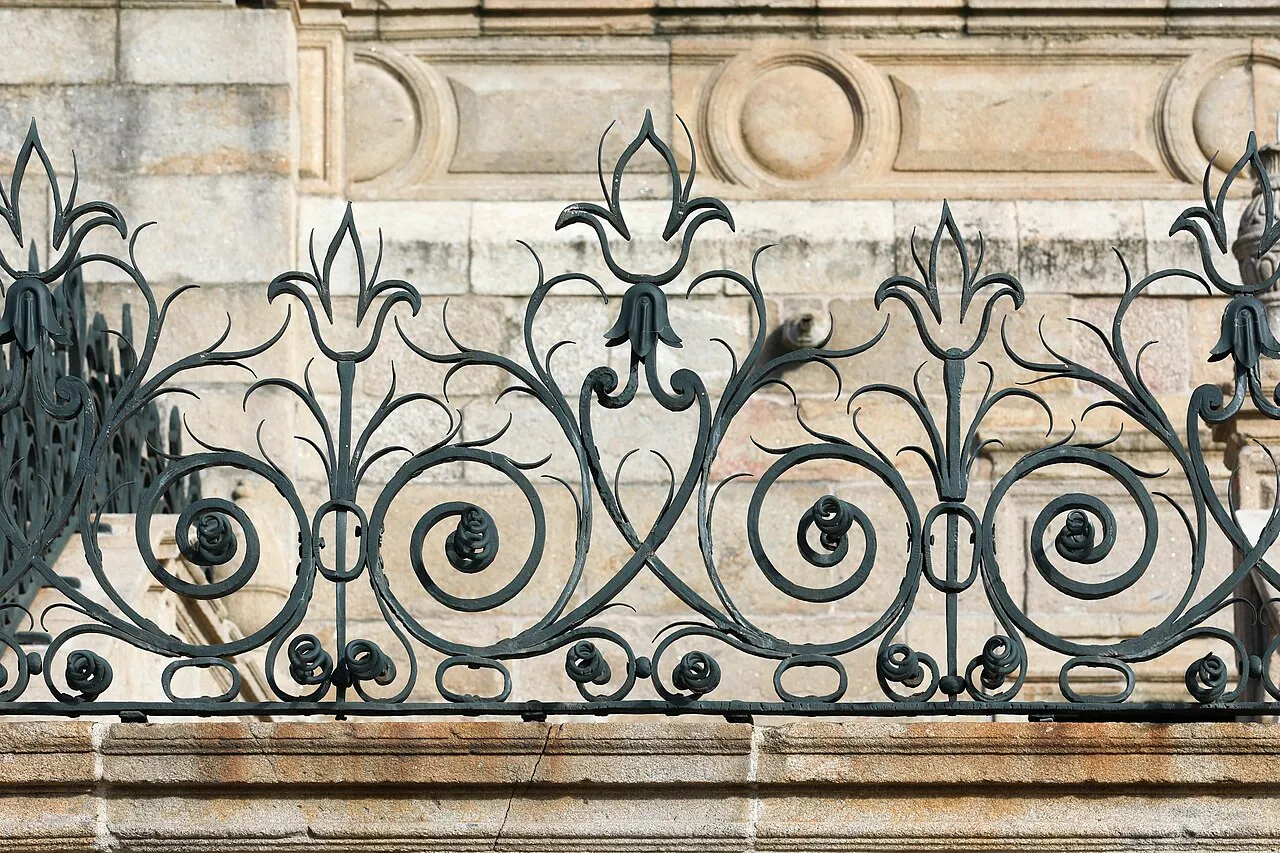 Catedral de Santiago
 Monte do Gozo
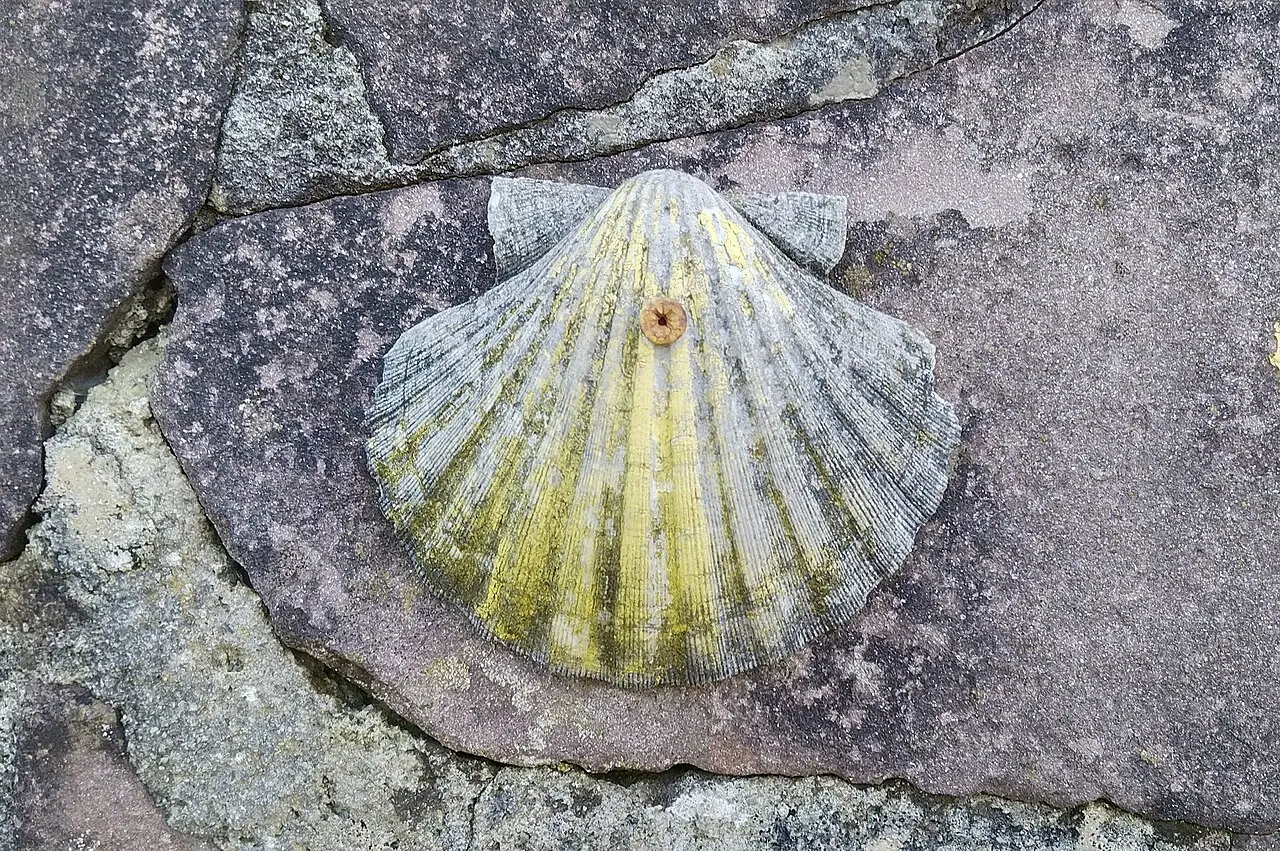 Concha jacobea
Photos from Wikimedia Commons, resized.